|
< 
Go back
THE TORRIANI BOOK OF HOURS.
Mulas, Pier Luigi
Facsimile with accompanying hardcover commentary
|
|
|
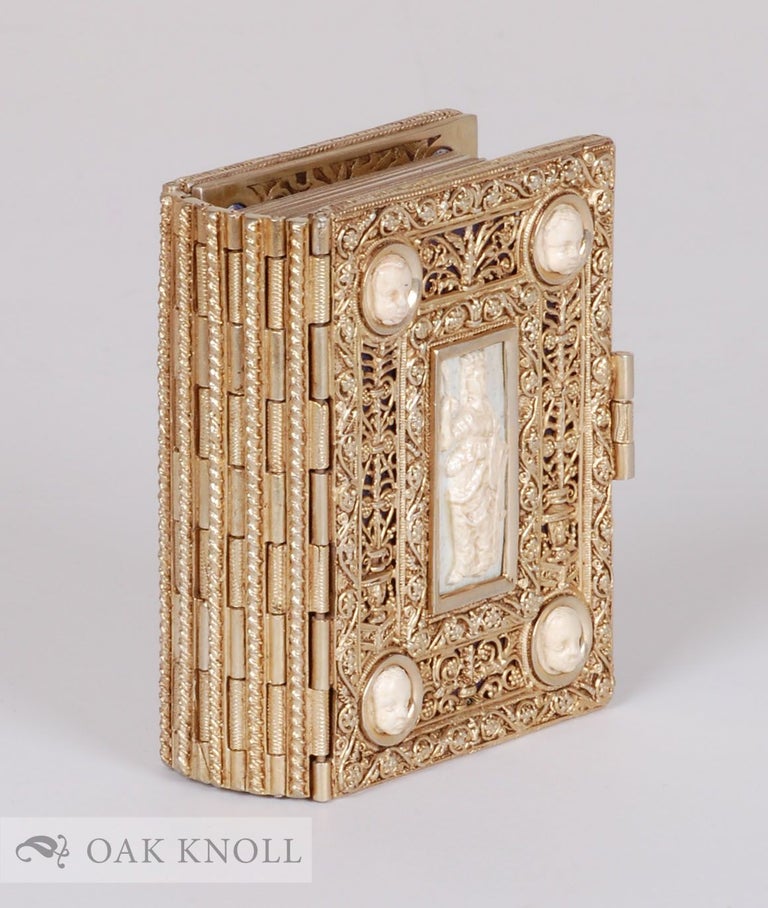
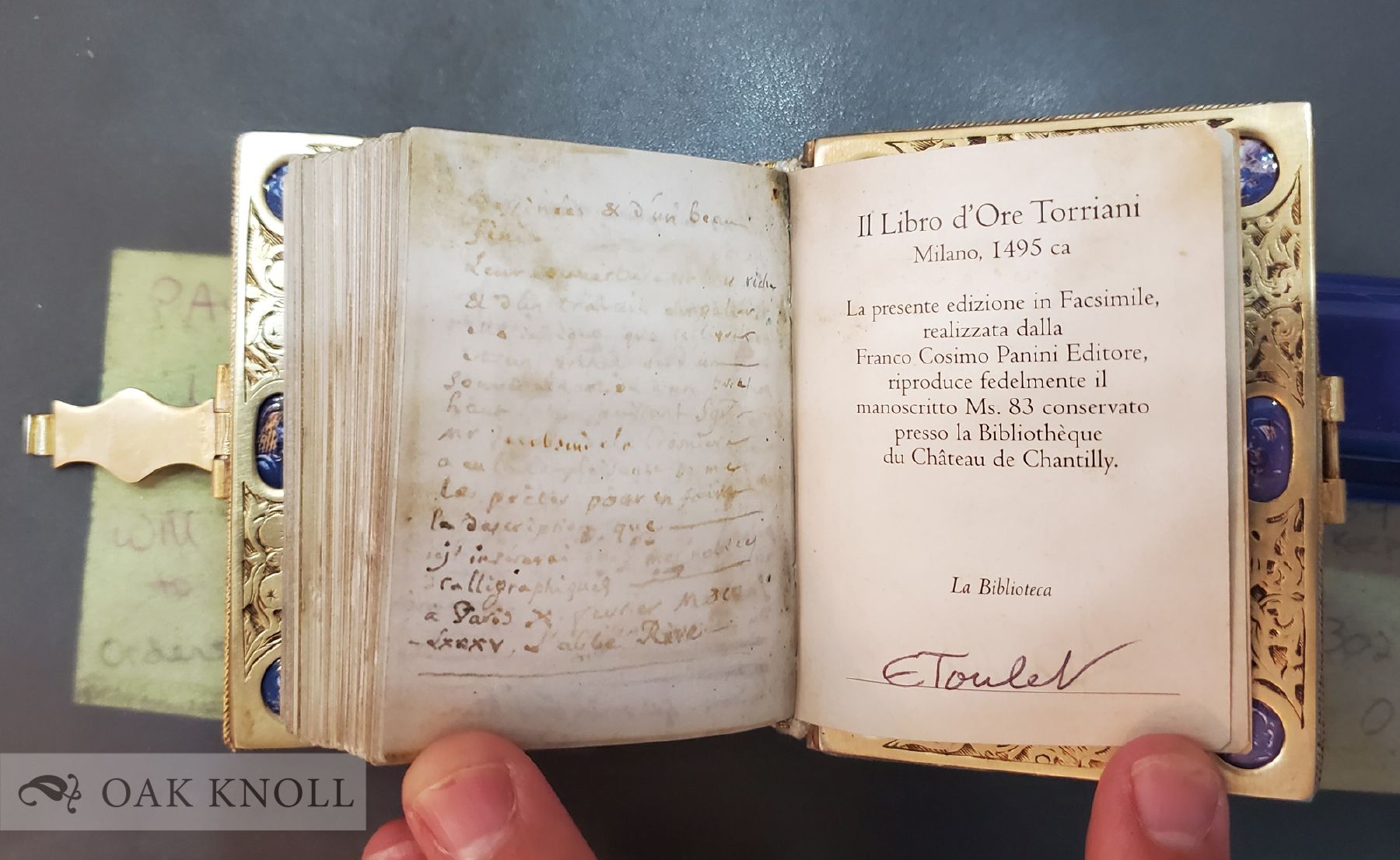
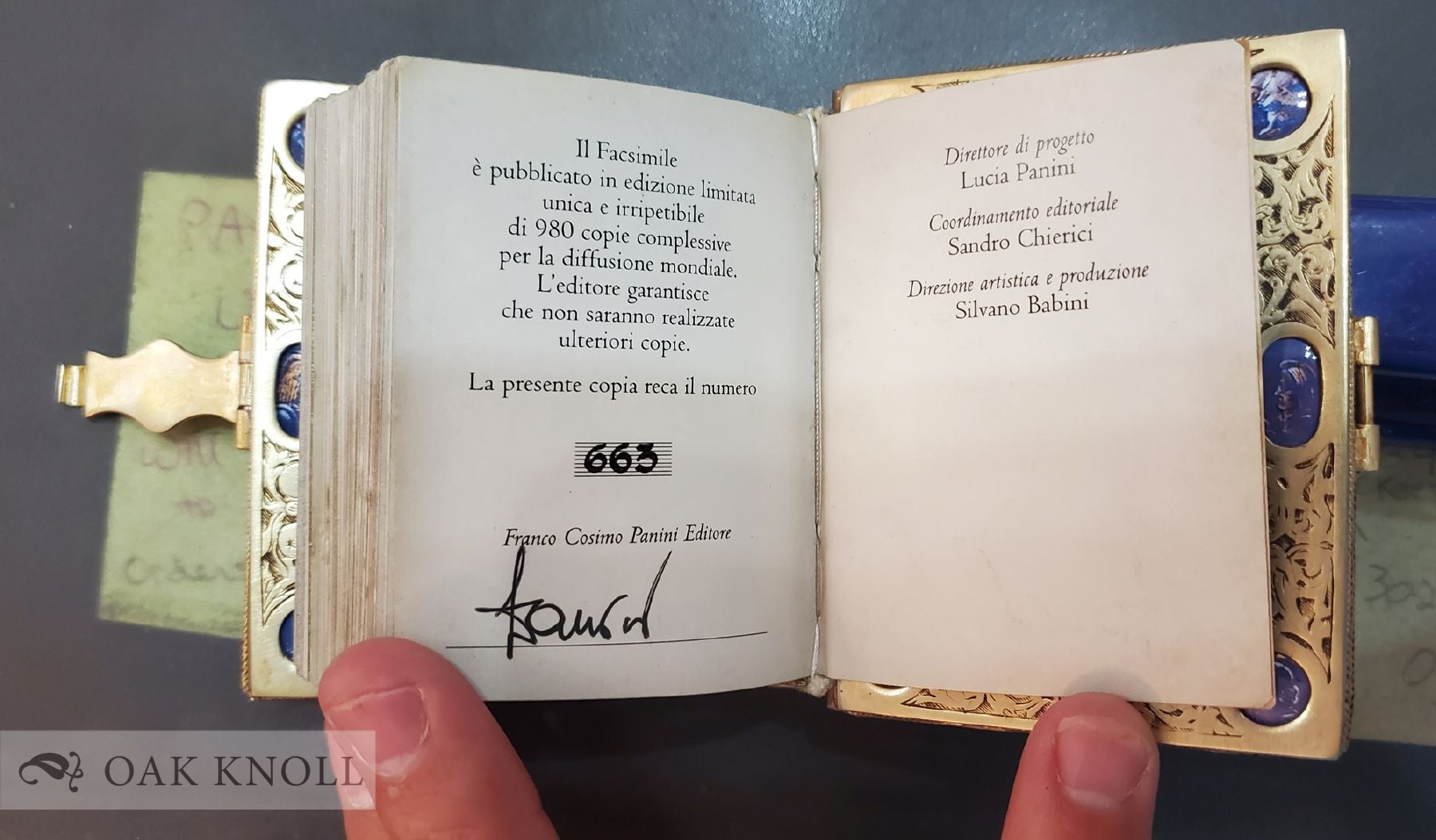
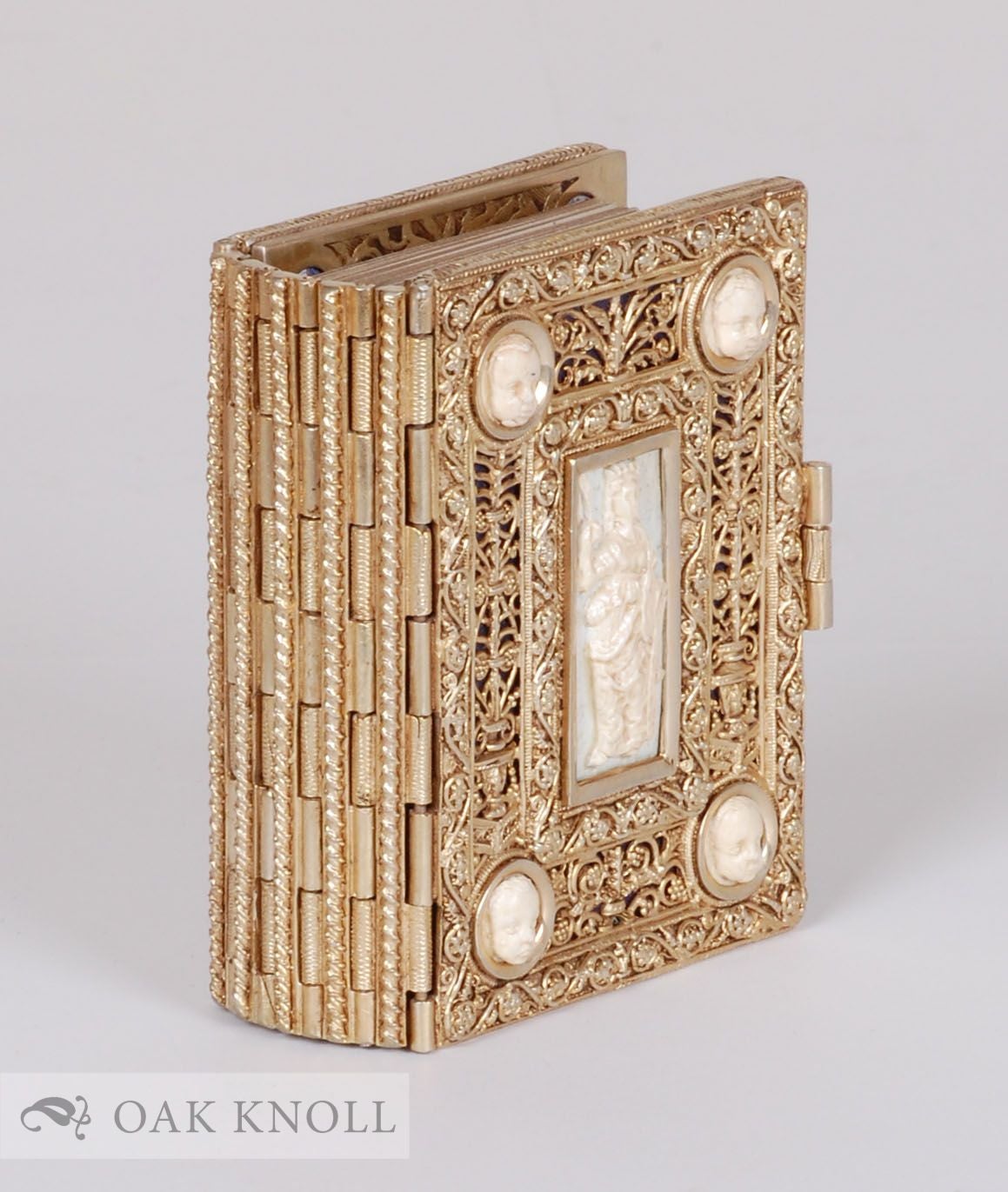
One of 980 copies. With its extraordinary binding and highly elaborate illumination work, while very small, this precious Book of Hours must be considered an absolute masterpiece.
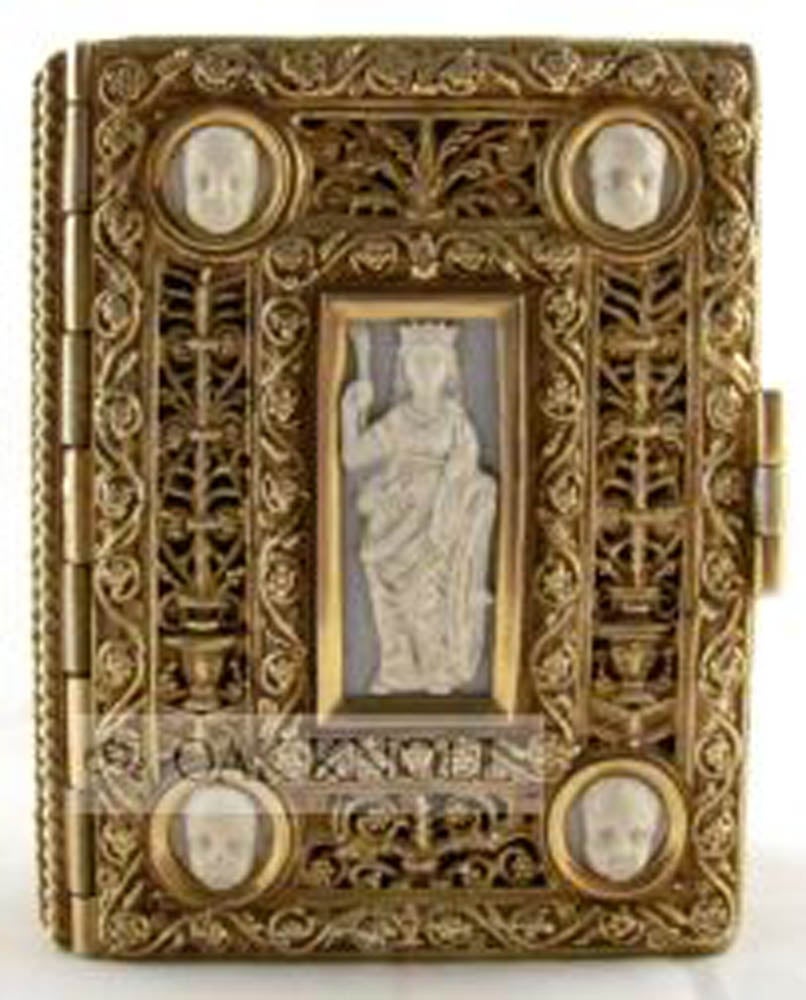
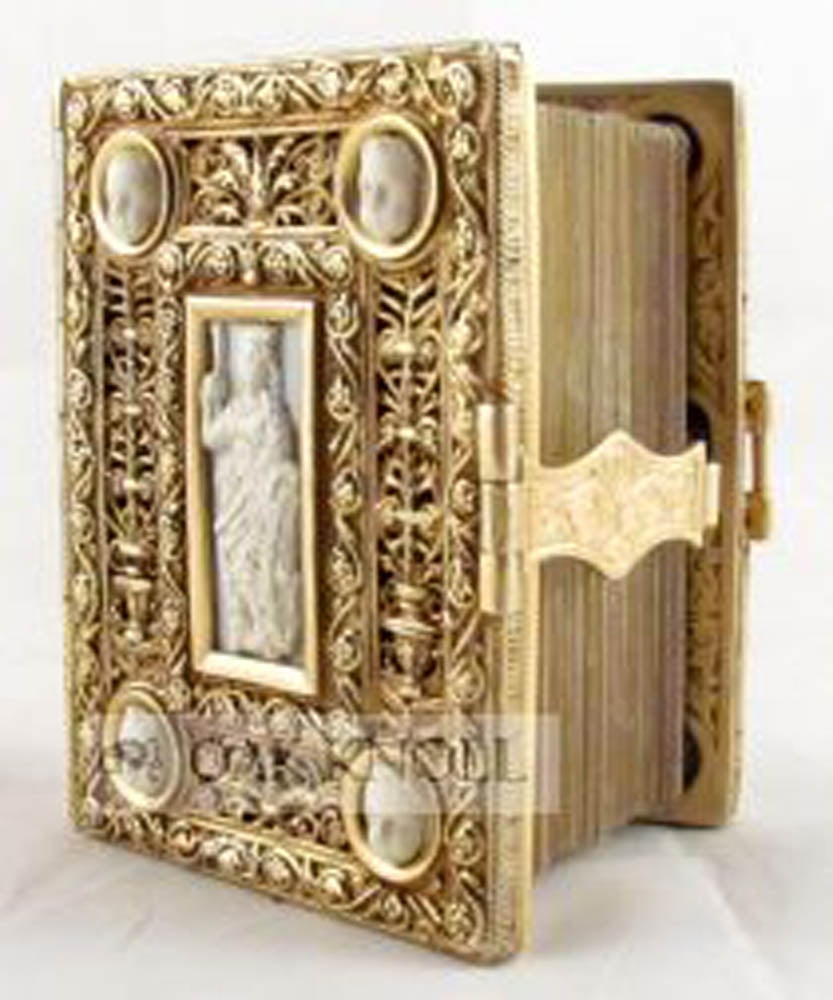
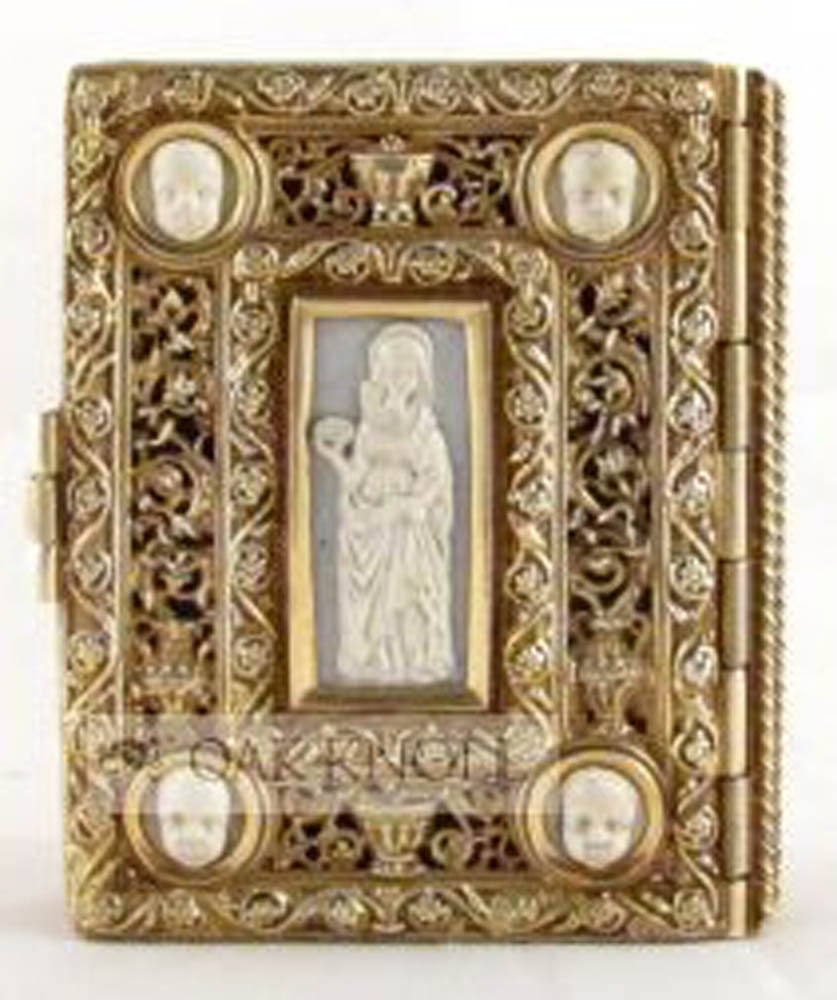
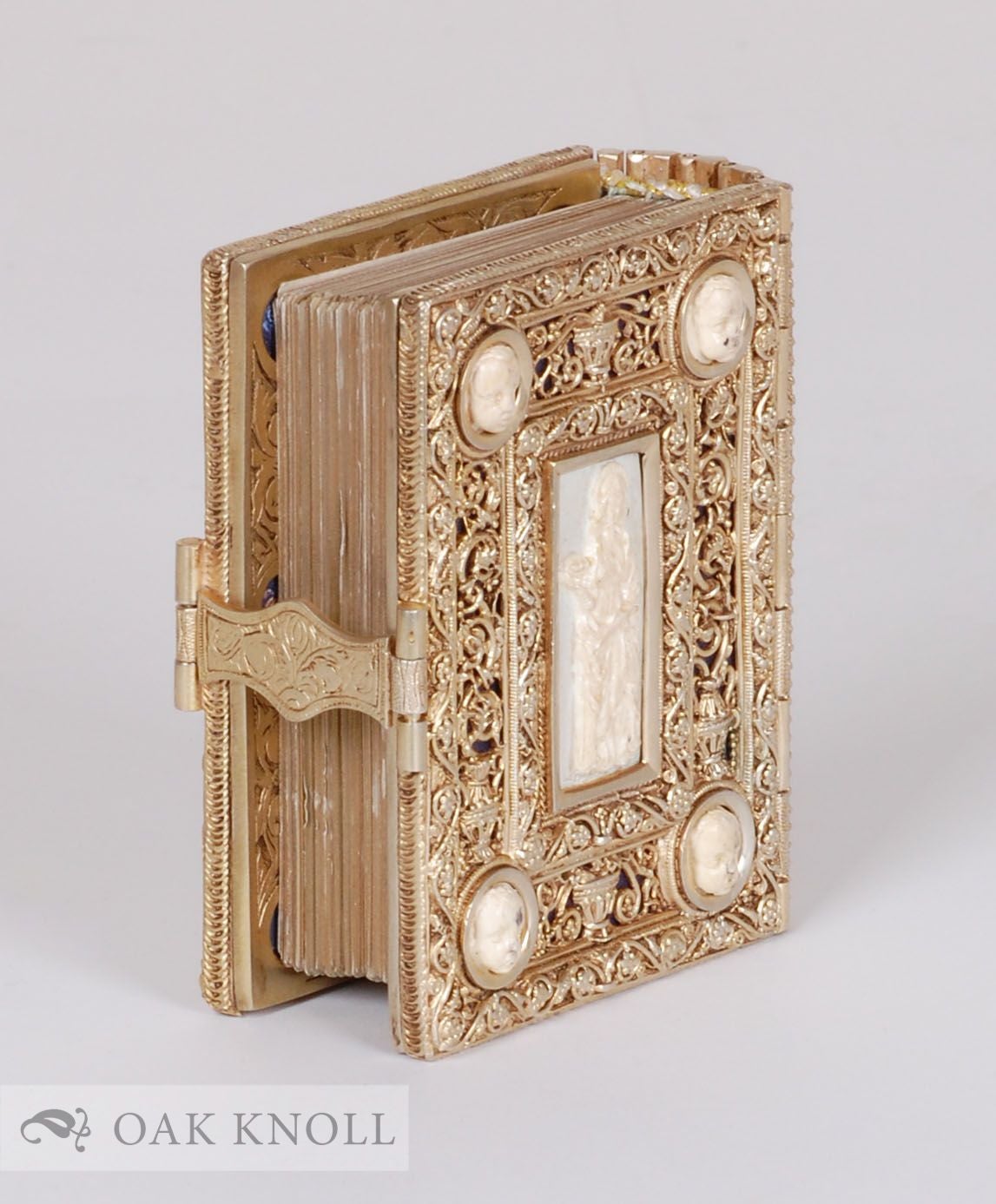
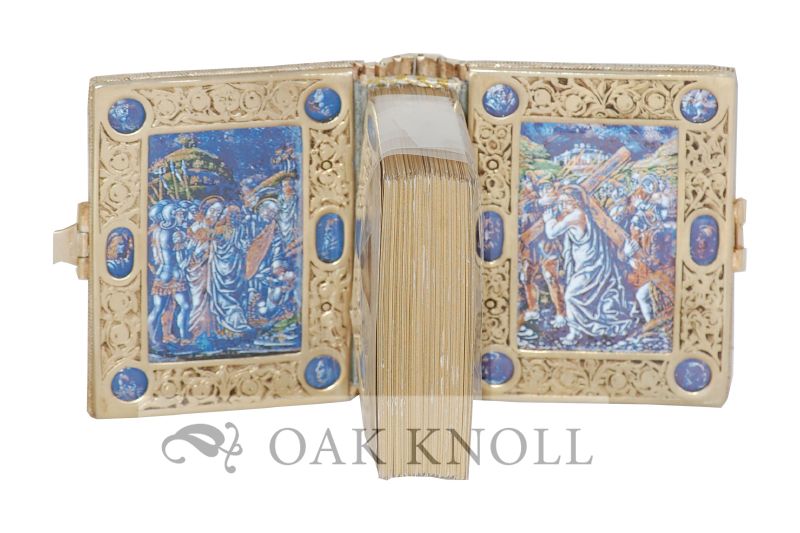
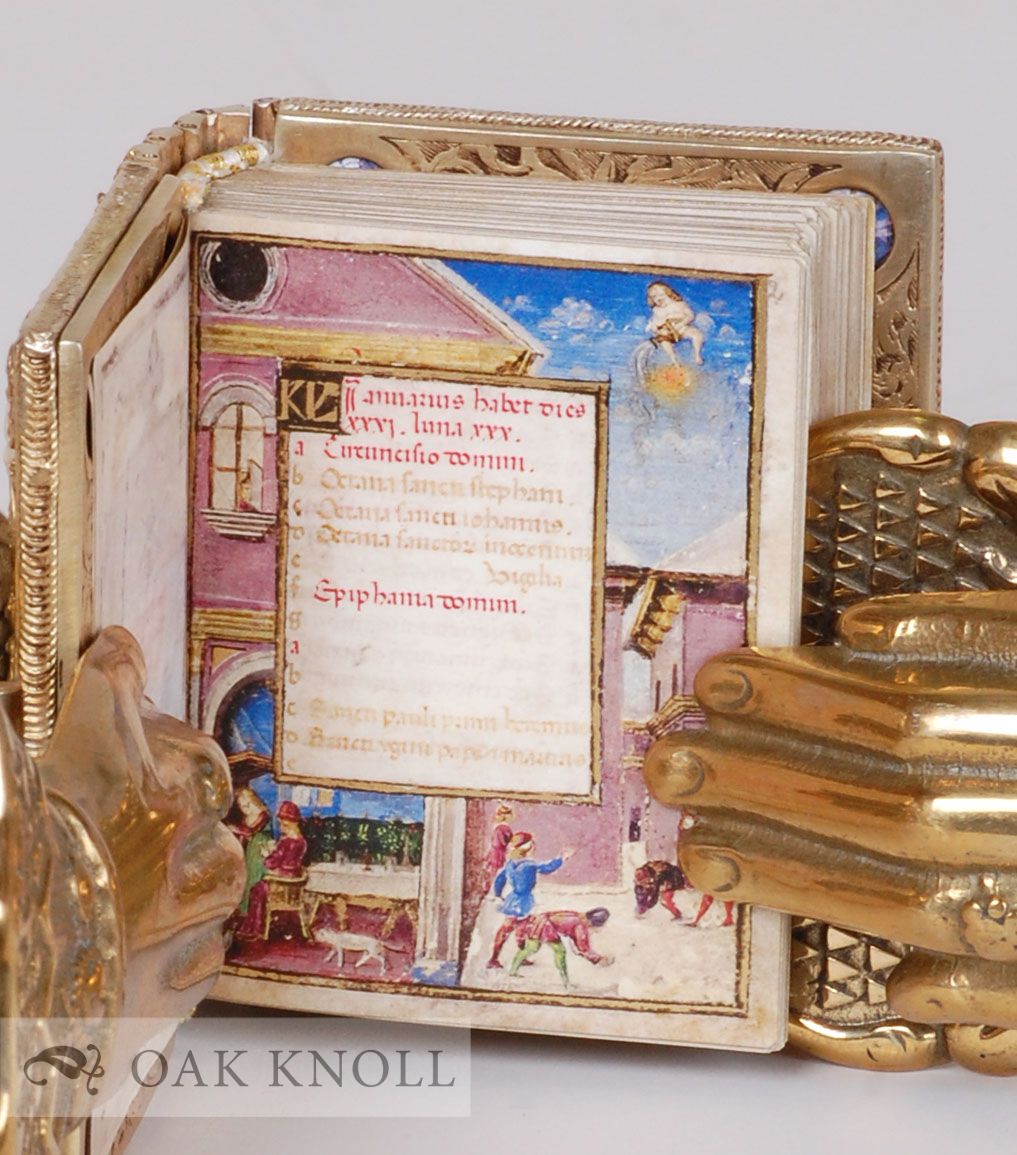
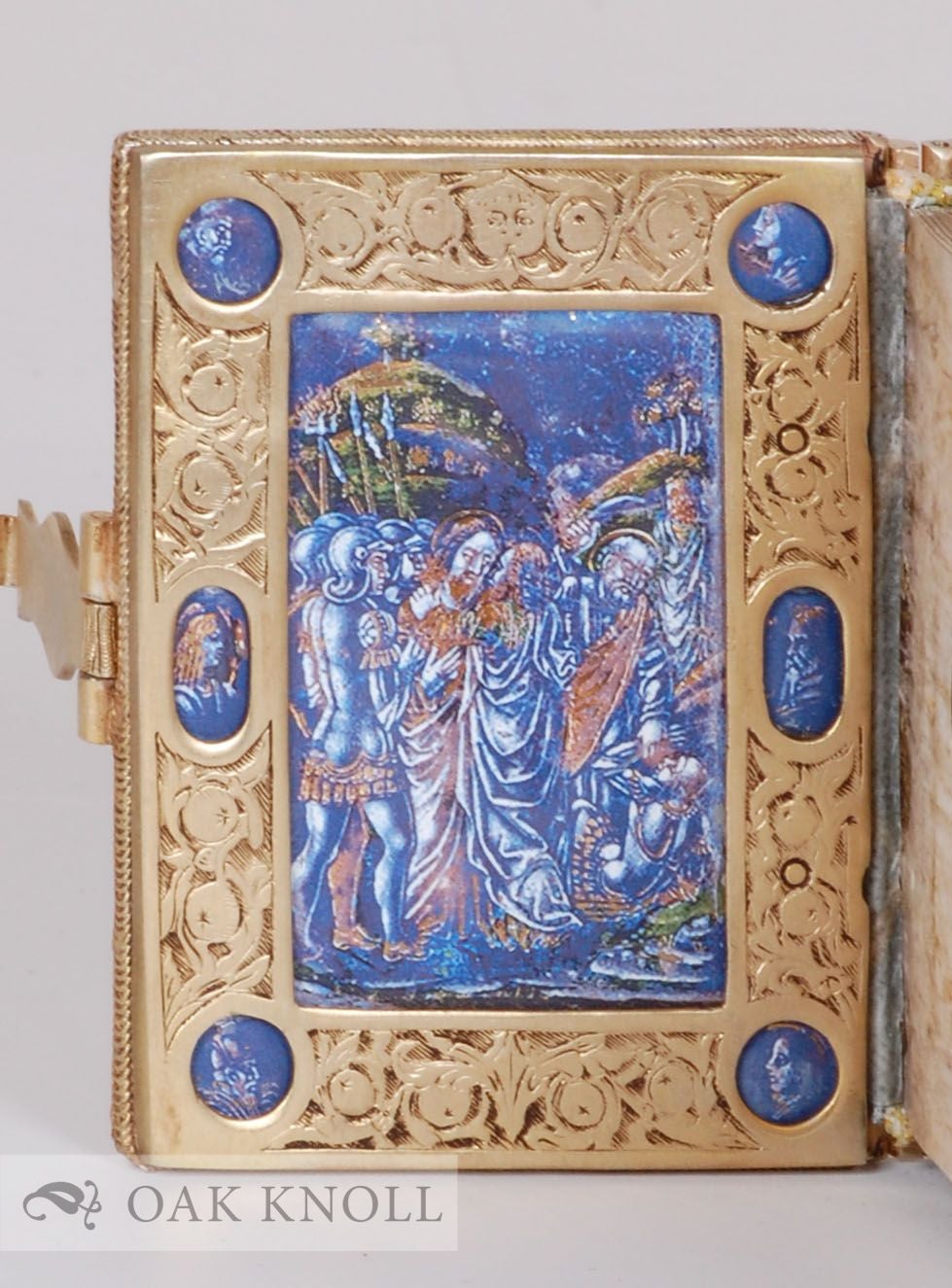
The splendid binding The Torriani Book of Hours is just one of a small handful of manuscripts of this period which still have their original bindings. It is therefore an exceedingly rare item. The two binding covers, with their gilded silver filigree work, are adorned with cameos representing Saint Catherine and Saint Lucy. Inside the binding covers, we also find 14 enamel inserts representing the Kiss of Judas, the Way to Calvary and twelve busts of saints. The wealth, luxury and refinement of the times is clearly illustrated by the Torriani Book of Hours, alongside other devotional works of this kind produced by the jewellers workshops of Milan under the House of Sforza.
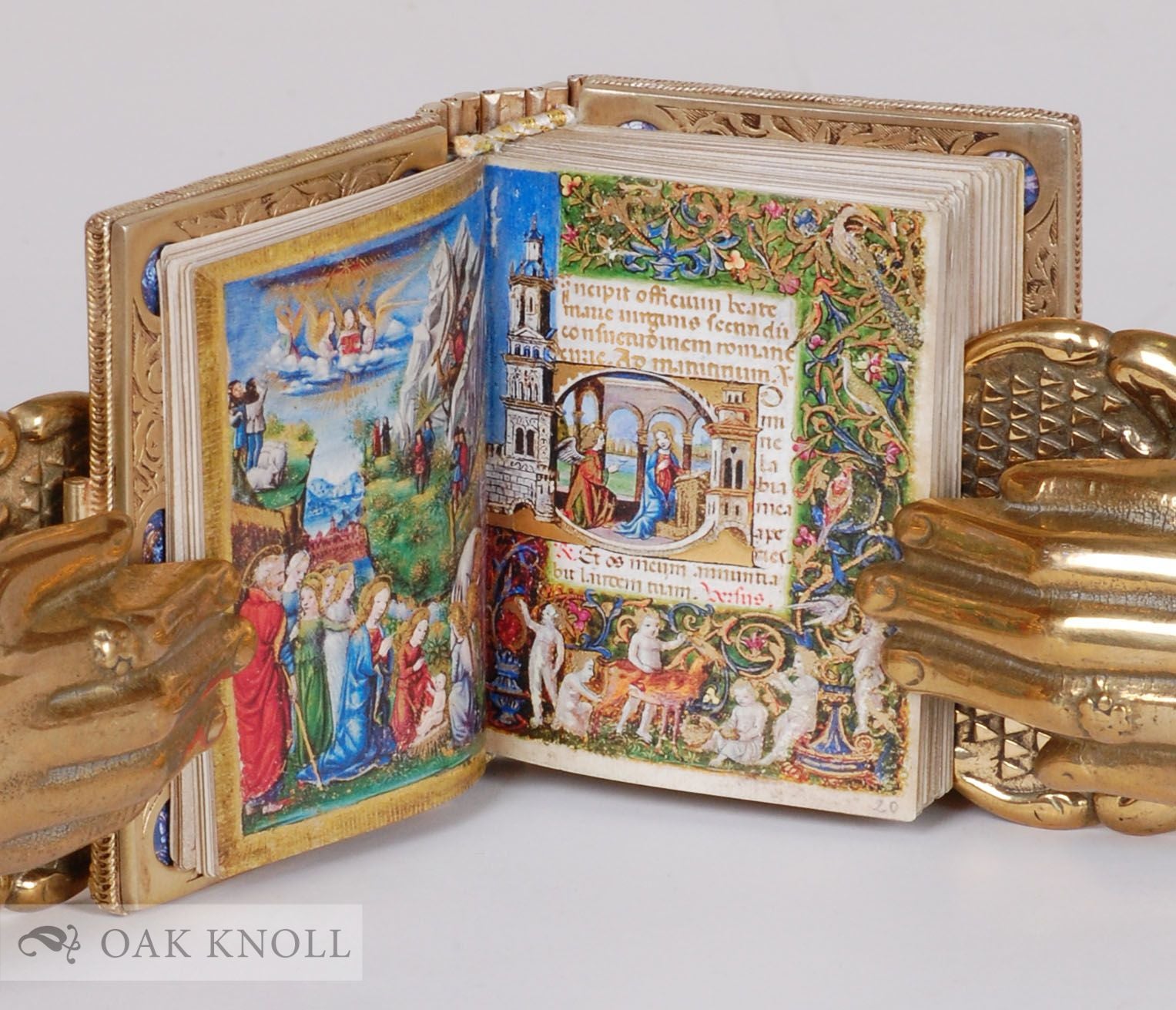
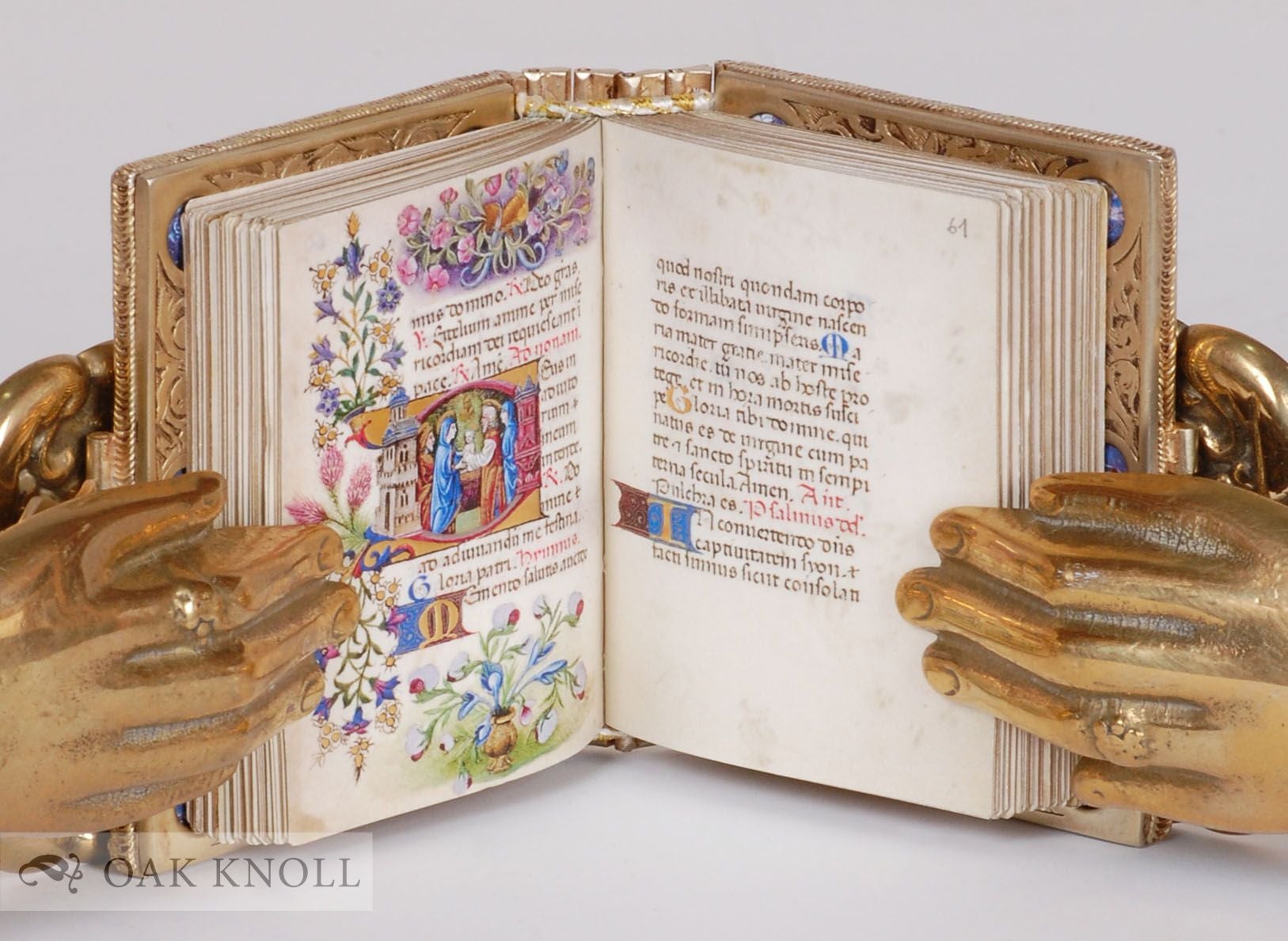
The refinement of the embellishments Thirty illuminations adorn this small devotional codex for private use. Twelve are Calendar illustrations. For the eighteen Offices of the Virgin we find six full-page illuminations and twelve pages with illuminated initials featuring architectural and floral motifs, putti, birds and rabbits.
A masters workshop The illustrations for the Torriani Hours may be ascribed to the Milanese bottega (workshop) of the master, Giovanni Ambrogio de Predis. This leading workshop operated in full awareness of the latest developments in the field of painting in Lombardy at the close of the fifteenth century, and, in particular, of the art of Leonardo da Vinci (with whom de Predis worked in 1483, on the Virgin of the Rocks). The embellishments of the borders, with their markedly naturalistic representations of animals, jewels and floral sprays, are the work of the young Matteo da Milano one of the leading illuminators of Milan who received commissions from the most important Houses of Renaissance Italy.
Patronage The codex was commissioned by the Milanese Della Torre or Torriani house, an illustrious family of Lombardy which, for some time, ruled over Milan. Further confirmation of the Milanese origin of the work is to be found in the inclusion of certain features such as local saints, in the Calendar, and the church of Santa Maria Maggiore, Milans old cathedral, surmounted by a statue of Saint Ambrose (the Patron Saint of Milan). However, the identity of the lady for whom the codex was made, perhaps a lady of the court of Ludovico Sforza, is unknown.
The Commentary: The work is accompanied by a book with commentary, edited by Pier Luigi Mulas, with writings by Marco Collareta, Jean-Baptiste Lebigue and Monica Visioli.
Facsimile is present with the accompanying commentary and a clamshell case.
E-mail/Export ?
More On This Subject - -
> ILLUMINATED MANUSCRIPTS
> ITALY
> INCUNABULA
> BOOK OF HOURS
> FACSIMILES
Books of related interests - -
> De Marchi, Andrea, THE DURAZZO BOOK OF HOURS.
> Medica, Massimo, THE BOOK OF HOURS OF BONAPARTE GHISLIERI.
> MANOSCRITTI INCUNABVLI E LIBRI FIGVRATI.

 |
THE DURAZZO BOOK OF HOURS.
by De Marchi, Andrea
One of 980 copies. The Libro d'Ore Durazzo, which takes its name from its last owner, is a small masterpiece by the painter and illuminator, Francesco Marmitta. This remarkable work is in two ways quite different from all other devotional codices for private use. One is the use of purple parchment. The other is chrysography, or writing in letters of gold the work of the master calligrapher, Pietro Antonio Sallando, who taught at the University of Bologna.
The illumination work of a goldsmith and jeweller: The illumination work is by the painter from Parma, Francesco Marmitta (circa 1462/1466-1505) also a renowned jeweller and inlayer, and the creator of other splendid works such as the stunning Missal of Domenico della Rovere, belonging to the museum of the municipality of Turin (Museo Civico di Torino). The leafs of these masterpieces reflect the artists sensitivity and delicacy, his marked interest in landscapes, and his taste for jewellery, medals and cameos, illustrated with extraordinary skill.
Embellishment of the highest order: Marmittas references to the revived classic tradition indicate a meditative approach. This aspect comes to the fore in his use of purple and of gold lettering, and is also underscored by his use of motifs such as trophies, medallions, cameos and bucrania. However, as a painter, the approach adopted for the Calendar and Offices of the Virgin reveals his awareness of the latest tendencies reflected in the culture of the figurative arts in Bologna, and a special interest in the work of Amico Aspertini.
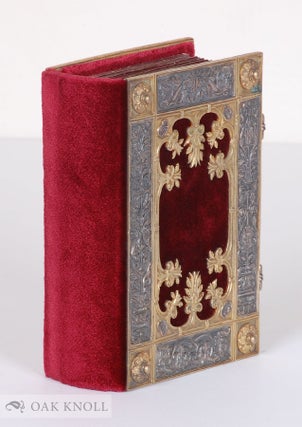
The refinement of the binding: The works lavishly elegant binding dates back to the time of the codex itself, and the love of embellishments is as evident here as in the illuminations. The binding features wrought and embossed silver, in part gilded, on crimson velvet. It also features a splendid profusion of classical motifs (acanthus and palmette motifs, ears of wheat, grapes, vases, masks, scarabs and bucrania). The silver clasps are adorned with two small rubies.
Patronage: A number of stylistic clues seem to indicate that the Libro dOre Durazzo was commissioned by a patron from Parma. We may also note Parmigianinos well-known Portrait of a Collector (London, National Gallery), in which the collector holds in his hand precisely this codex. It is believed that the codex accompanied Francesco Marmittas second son, Jacopo, to Portugal. However, in the nineteenth century it was in Genoa. Firstly, it was in the hands of the merchant, Antonio Bacigalupo, who inherited it from his father, Francesco, and then in the hands of the Marquis Marcello Luigi Durazzo a collector, who, having purchased it from Bacigalupos widow, then bequeathed it to the Biblioteca Berio.
The Commentary: The work is accompanied by a book with commentary, edited by Andrea De Marchi, with writings by Beatrice Bentivoglio-Ravasio, Andrea De Marchi, Davide Gasparotto, Laura Malfatto, Laura Nuvoloni and Federica Toniolo.
Facsimile is present with the accompanying commentary and a clamshell case.

|
|
|